


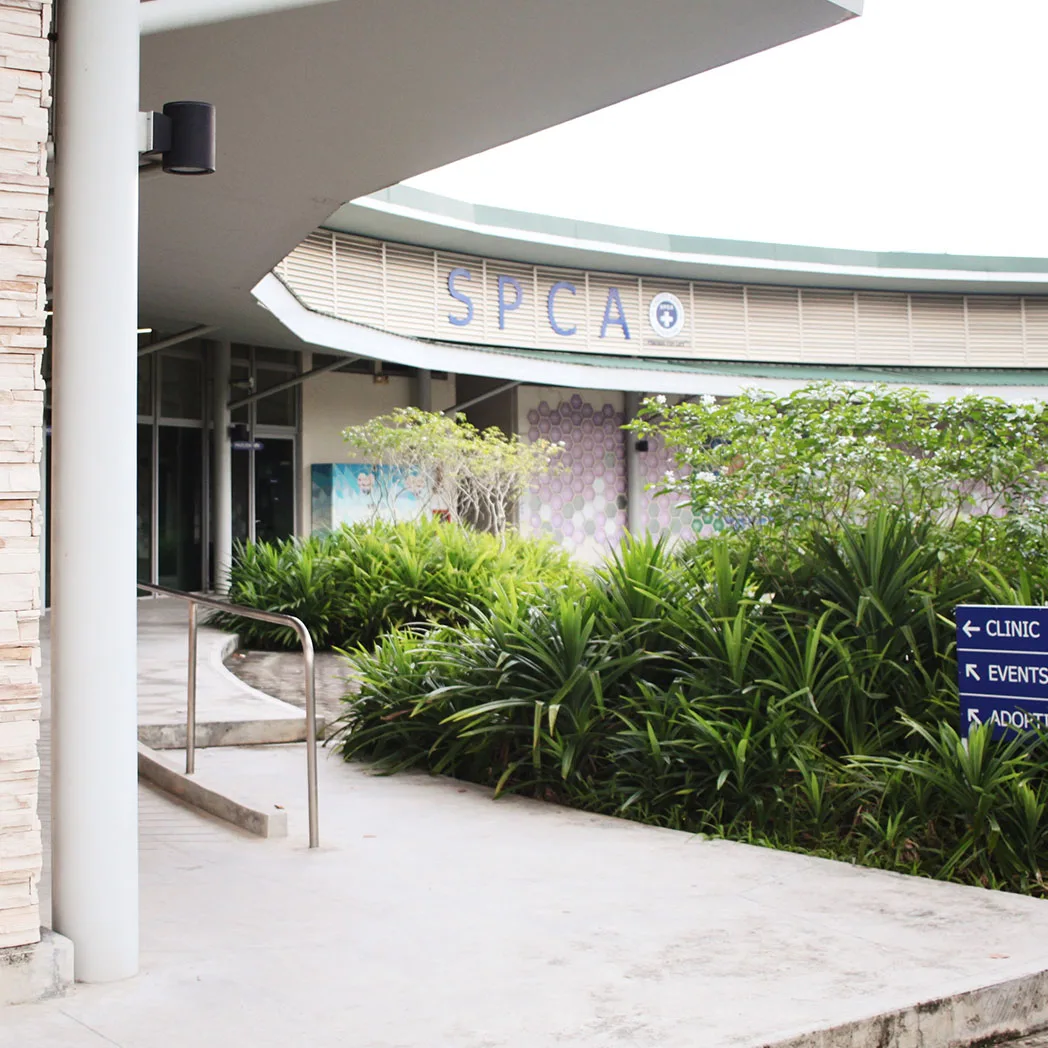
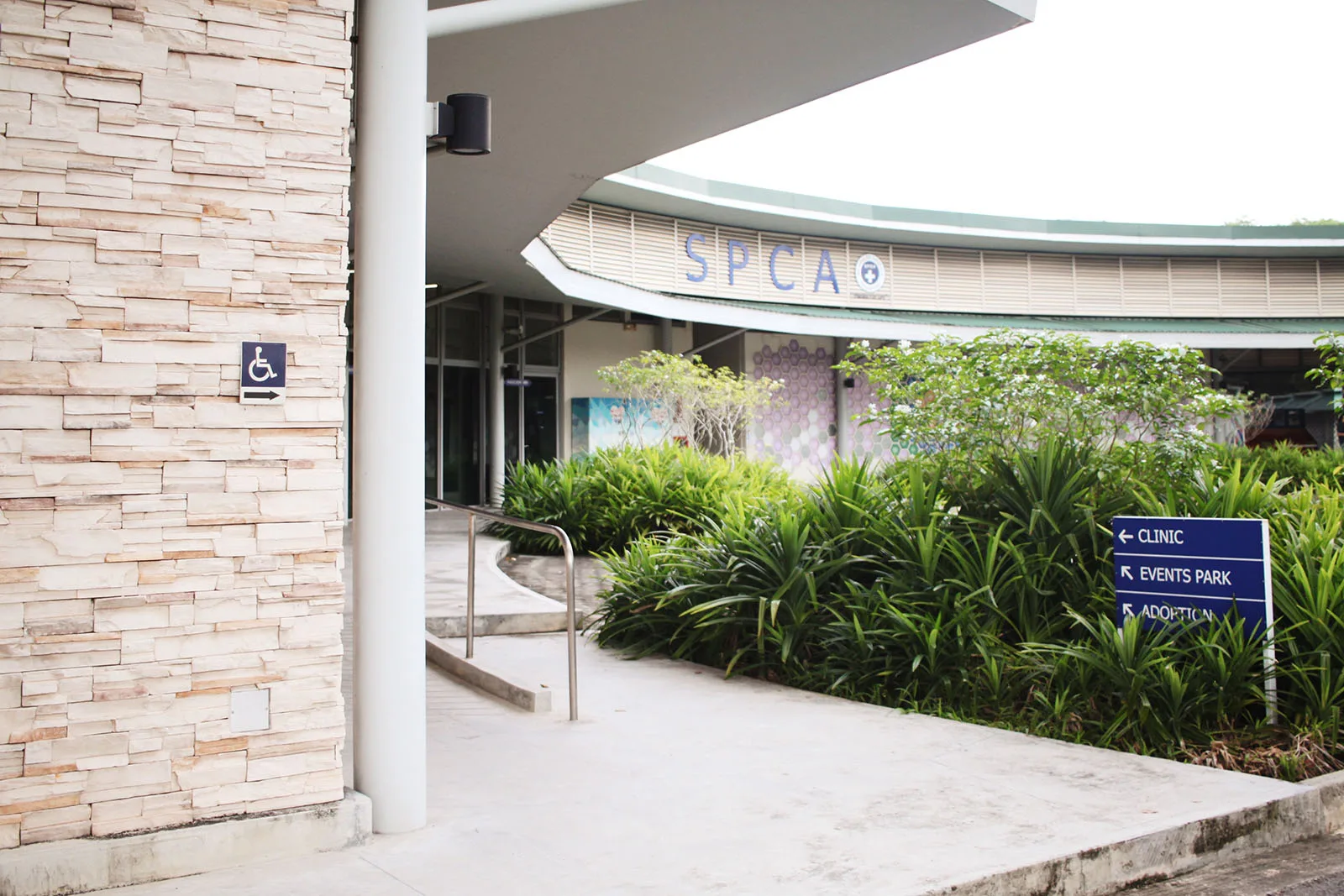
Like many other organisations, the SPCA Singapore has its share of supporters and critics. Some of the untruths that are being spread are fairly harmless, while others can actually be detrimental to animal welfare. The SPCA has been addressing these myths on many of our public platforms, but nothing beats hearing it from someone within the community.
YOU can join our movement to help people around you gain a more accurate understanding of the SPCA and animal welfare. Let’s start by dissecting 5 myths about the SPCA:
Fact or Fiction #1: “The SPCA is a Government Authority”

FICTION! Many people mistake the SPCA for AVS/NParks.
The SPCA is a non-governmental, registered animal welfare charity. We rely mainly on public donations and are not funded by the government. The only exception, as at 2024, is the Trap-Neuter-Rehome/Release-Manage (TNRM) programme for community dogs. This is a government initiative, whereby the SPCA and other animal welfare groups receive funding to render services such as humane trapping and sterilisation of community dogs.
In Singapore, the Animal & Veterinary Service (AVS under NParks) is the government authority on animal and veterinary matters. They are endowed with legal powers of enforcement and prosecution.
The SPCA does not have legal rights to perform actions such as seizing people’s pets, rehoming pets without the owner’s consent, requesting and/or viewing CCTV footage, and prosecuting offenders. Instead, what our inspectors do is to gather information to build the weight of evidence and escalate the case to the authorities. We work closely with the authorities and follow up with them on a regular basis.
Fun fact: There are SPCAs in other countries that are afforded powers of enforcement and prosecution, such as some member states of the RSPCA Australia.
While the SPCA is a name shared by many non-profit animal welfare organisations worldwide, we operate independently of one another and are not affiliated in any way. Hence, our practices may differ.
Fact or Fiction #2: “The SPCA is the go-to for owners who wish to give up their pets”

FICTION! For pets who are accustomed to a home environment, the sudden transition to a shelter can be traumatic.
While the SPCA has accepted surrenders on a case-by-case basis, this is often the last recourse. Our shelter is home to more than 150 animals, many of whom are unwell or seeking medical treatment. Bringing healthy animals into close proximity with shelter animals may cause them unnecessary stress or increase their chances of contracting illnesses. It also reduces the vacancies for animals who require urgent treatment which can sometimes mean the difference between life and death.
Instead, owners should explore other options for responsible rehoming.
Perhaps out of desperation, some owners tell us that they are considering abandonment. This is not only cruel but also criminal. Under the Animals and Birds Act, anyone who is found guilty of animal abandonment can face a jail term of up to 18 months and/or a fine of up to $15,000.
Plan for a lifetime, right from the start. In many cases of pets being given up, the owners had not thoroughly evaluated their readiness to have a pet. If you are thinking of getting a pet, please carefully consider:
- The fit between your entire family and the pet in terms of preferences and lifestyle.
- Your ability to meet commitment levels with regard to quality time spent with the pet and financial resources, among others.
- Contingency plans in worst-case scenarios, such as alternative accommodations for the pet if the main caregiver were to fall ill, relocate, or no longer be able to care for the pet.
- Your ability to see your pet through the entire course of their life.
Fact or Fiction #3: “If I see an animal in need, I should call the SPCA’s hotline”

FACT! Our emergency hotline (6287 5355 ext. 9) is manned 24/7.
We frequently receive alerts from members of the public through email and social media. These channels are not monitored round-the-clock which means that we may not see your message in time. For animals who are in immediate danger, even a slight delay can mean the difference between life and death. You can make that difference by calling our hotline.
Our frontline team will speak with you before looking into the dispatch of a rescue officer. This cannot be done over email or social media as our frontline officers would have the most updated information on the current deployment of our rescue officers and vehicles. They are also equipped with the knowledge to prioritise emergency cases, in view of our limited resources and high volume of animals needing help.
Fact or Fiction #4: “The SPCA is unable to help every single injured animal”

FACT! But that does not stop us from trying our best.
The SPCA has limited space in our shelter and clinic. When we approach full capacity, we are forced to prioritise taking in only life-or-death emergencies. It would not be fair to receive an animal when we know that we lack the resources and manpower to offer adequate care.
However, this does not mean we leave the animal unaccounted for. Our frontline officers gather information from the feedback provider to triage the animal’s needs, refer them to other animal welfare organisations, and connect them with community caregivers or independent rescuers.
Unfortunately, with fewer animals being adopted, the SPCA is constantly running at or near capacity. Due to the need for prioritisation, many of the animals we receive have more complex needs or are geriatric, making them less favoured by adopters even after they have recovered. Over the past year, the proportion of animals in this category has increased which contributes back to the low adoption rates. This is a spiral we are trying to reverse through education and outreach efforts that promote adopting over buying a pet, and that highlight how senior or local breed animals can make just as good companions as pedigree breeds.
Fact or Fiction #5: “The SPCA euthanises animals who are old or less adoptable”

FICTION! This is a longstanding myth that affects our real work.
Since 2019, no healthy or treatable animal has been euthanised at the SPCA Singapore. Euthanasia is a grave decision that weighs heavily on the shoulders of all involved.
In the past, when the SPCA alone had thousands of animals to manage in a limited space, euthanasia was a more humane last resort than leaving an animal to die on the streets. Today, things have improved with greater acceptance of community animals and more caregivers and welfare groups sharing the load. Euthanasia is only considered if the animal is severely ill and suffering, with no other recourse. When it becomes necessary, multiple vets conduct thorough assessments before proceeding.
Unfortunately, people continue to share erroneous messages about animals being put down if they are not adopted. Some people refuse our assistance out of fear that the animal will be put to sleep. There have also been potential donors who hesitate to leave a legacy because a friend told them that the SPCA euthanises animals to make space. Because of these rumours, our animals are denied the help they desperately need.
Icon credits: Flaticon (Freepik, Leremy, VectorPortal)
Did you correctly tell fact from fiction? Now that you know more, we hope you will share the knowledge with those around you. The ultimate beneficiaries will be our animals!